Health Testing
Health testing is something that every ethical breeder should be striving to do. While no dog is perfect, having health testing knowledge on dog’s we produce is highly important in putting forward only the best candidates. Testing also helps with tracking/identifying health concerns through the generations. While health testing can be pricey, there is no reason breeders shouldn’t be doing everything they can do and provide information on the dogs tested in their programs. We want to disclose all that we do to set a precedent for other breeders and educate owners on things to look for when looking at responsible breeders. Mind you each breed may have different health testing requirements and needs, but these are the standard for Shiloh Shepherds.
What Health Testing Is Done On Our Breeding Dogs?
Hips and Elbows– All of the dogs in our program must pass hip and elbow testing. We do so through one of the following venues:
–PennHip: Pennhip is generally more pricey as the dog must be sedated to complete the test. The dog is then positioned in various, specific positions to test for measurements on laxity in the hips and elbows.
–Orthopedic Foundation for Animals (OFA): OFA radiographs can be done under sedation or not sedated (most of our dogs go this route and are not sedated as we have an amazing specialist). They are positioned in a specific way for the radiographs, and then a board of orthopedic veterinarians grades them based on the rest of the breed.
Echocardiogram (OFA)– We make sure to clear our breeding dogs with an echocardiogram which assures the structure and function of the dog’s heart is proper and rule out issues such as sub aortic stenosis.
Holter Monitor– Every dog we produce in our program goes through a 24 hour holter monitor test, breeding dogs must have no findings that denote GSDIVA on this test or they will be removed from our program. More on holters here.
Eyes (OFA)– This is a less available test in our area but we attempt to complete this when a clinic comes around. Eye testing results can change over the life of the dog, so if there were to be any concerns with a breeding dog they will be retested when and if needed.
DM (OFA)– We assure all of our dogs are tested against degenerative myelopathy, whether it be by parentage or swab testing through UC Davis. If a dog is a carrier, they are to only be bred to a normal dog who doesn’t carry a copy of DM to prevent this issue from ever coming up in our breeding program. It is a simple but highly important thing to evaluate when choosing pairings in our program. This issue is very easy to genetically protect ourselves from and should be done and tracked by all Shiloh breeders. There is no excuse to not do this!
DNA (UC DAVIS)– We store all of our breeding dogs DNA with UC Davis (as does the rest of our registry) to define parentage is indeed correct on a genetic level and track diversity with each dog (more on that below).
Genetic Diversity Reports (UC Davis, developing test)– As a breed we have been pushing to contribute our DNA samples to our UC Davis genetic diversity project. One of the things this project takes note of is the haplotypes of each of our dogs and tests them against our population as a whole. From my understanding, diversifying haplotypes helps to lessen the impact of things like autoimmune issues in dogs. We then take that information with pairing tools to see if a male and female will produce the most genetically different puppies possible! Other things observed are IR (internal relatedness), STR’s (short term alleles) and rare versus common allelles/haplotypes. This is a developing tool that we are still figuring out and learning by doing! As breeders we should always be open to growing our toolsets and knowledge to continue to better our breeds!
Temperament Tests/Canine Good Citizen– Outside of physical health testing, we also make sure our dogs pass our breed specific temperament testing and most get their Canine Good Citizen certificate. Some also are therapy dog certified as well. We want to assure we put the best dogs forward that are prime examples of the breed.
Faults and Virtues– For our registration, we make sure to assess faults (areas needing to be focused on and improved in that specific dog) and virtues (attributes that fit or outdo the breed standard) in every dog that is upgrading to a breeding certificate. This is done after health testing is completed. We evaluate things such as movement, conformation, temperament, drive, workability etc. This information is then tracked as the lines move forward to assure we are always breeding in the direction of the breed standard.
How Do We Select Our Breed Pairings
Selecting a boy for our females is a complicated process. It does not involve only singular element, but a web of weighing the odds and using knowledge and experience in our decision making process. Each breeding selection may bring something a little different to the table and is no easy feat to decide upon. No breeding is taken lightly in our program, and we are generally looking over multiple options for our girls well before a breeding ever comes to fruition.
Pedigree– Pedigrees are one of the first things we look at. Without getting to complicated we look at things like inbreeding coefficients, outcross percentage levels, how high some of our foundation dogs come up, percentage of blood relation and the physical dogs that build the background of the pedigree themselves.
Health– After looking at pedigrees (and individual dogs health testing) we highly research what has been produced in those lines, and if the dogs aren’t proven (haven’t had puppies before) we look at what relatives, littermates, and other breedings with similar elements in their pedigrees have produced. This can be a time consuming process and one that should be looked at with a fine tooth comb.
Temperament– Temperament should be paramount when selecting a dog to pair with any female, and not just the temperament of the immediate dogs, but the dogs behind them, littermates of the parents, etc. It is important to balance your dogs attributes and faults carefully when selecting a stud and we do just that to assure we are breeding in the proper direction.
Conformation– Conformation is the physical attributes of a dog that we look over in comparison to our breed standard. It is important to pick a male to compliment our females and balance out if they have any conformation faults. And when I say faults I’m talking very minuet things such as bone density, chest protrusion, stifle/shoulder angles, head and ear shape etc. It is far from anything detrimental, but we always pick the best male to balance out our girls while also upholding the standards above.
Diversity– We have recently acquired new tools (such as the Genetic Diversity Reports above) to look further into picking the best match for our girls on a micro level! These tools help us to use science alongside the tools above to make informed decisions based on the actual genetic makeups of our dogs. Even two male littermates can carry different versions of haplotypes for example on a DNA level that may help us to choose one boy over another for our girls. Pretty cool!
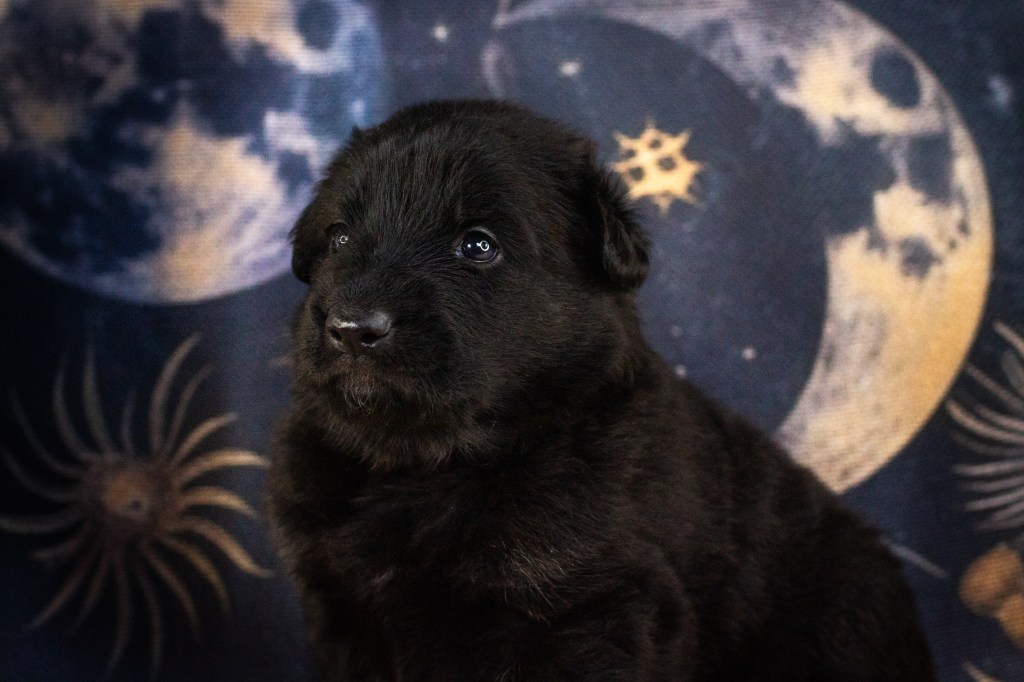
As you can see, we take our program and the decisions around it seriously and make sure if there is anything to look into with any dog we do so to the highest level possible. Even with doing all of this, there is always a possibility issues can pop up with living breathing animals. But rest assured even in a worst case scenario we are always here for our puppy owners to offer any level of support we can. This is just a small glimpse of what we do to put our all into making the best, most informed decisions for our program!
 NewMoon Shiloh Shepherds